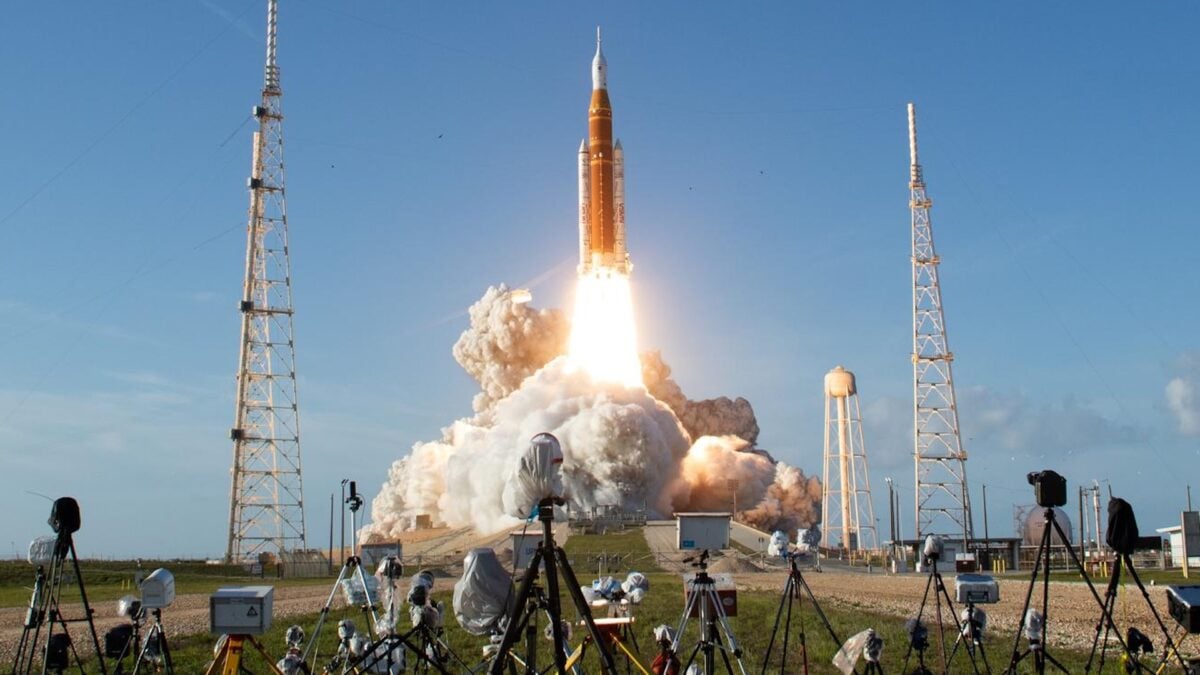
The giant rocket launch for NASA's Artemis II mission created a massive hole in the upper atmosphere of Earth. This atmospheric tear was so large that it disrupted GPS signals for people on the ground. Scientists caught the unusual event after the heavy moon rocket blasted into the sky.
Why did the Artemis II launch break the upper atmosphere?
When a massive rocket blasts into space, it releases a huge amount of energy and hot exhaust gas. The Artemis II moon launch carried so much power that it literally punched through the layers of air above our planet. This intense force pushed away the charged particles that live in the upper atmosphere, leaving a temporary empty space behind.
Scientists monitor these high layers of air every single day to keep track of space weather. They noticed that right after the rocket went up, the normal layer of air suddenly thinned out. The massive hole stayed open for a little while before the atmosphere could slowly fill itself back in.
How did the moon rocket disrupt GPS signals?
Satellites send radio signals down to Earth so your phone and car can tell you where you are. These weak signals must travel straight through the upper atmosphere to reach your device. When the rocket tore a hole in that air layer, the sudden change bent and blocked those space signals.
Because the air was disrupted, the timing of the signals got mixed up for a short moment. This caused real GPS disruptions for equipment trying to connect to satellites in that area. Here are the main things that happened during the atmospheric event:
- The rocket released huge amounts of energy as it headed toward the moon.
- The blast tore an open gap in the charged upper air layer.
- Satellite signals struggled to pass through the broken atmospheric gap.
- Navigation tools on the ground lost their normal accuracy for a short time.
What does this mean for future rocket launches?
Space agencies are planning to build even bigger rockets as human space travel grows. The powerful Artemis program will send more heavy landers and supply ships into the sky over the coming years. If every big launch tears a hole in the air, scientists need to prepare for more satellite issues.
Engineers are studying this event to see how future flights can avoid messing up key navigation tech. They want to predict exactly when and where these air gaps will form so companies can guard their equipment. Learning to share the sky safely is a big goal for everyone moving forward.
Comments
Post a Comment