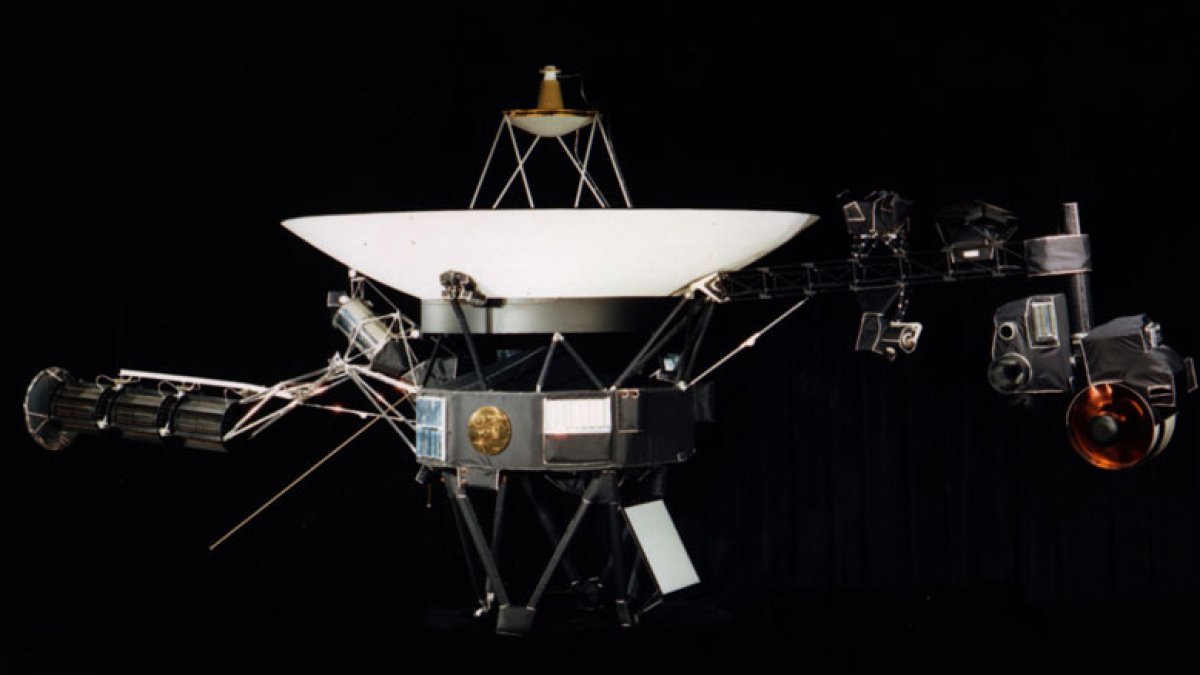
NASA's Voyager 1 is about to set a new distance record by reaching one light-day from Earth. The famous spacecraft continues to travel farther into deep space than any human object in history. This massive achievement shows just how far early technology can travel across the universe.
What is the Voyager 1 light-day distance record?
The spacecraft is reaching a spot where its signals take a full day to travel at the speed of light. This distance record proves that the spacecraft is still working hard in deep space. It has been flying away from our world for decades without stopping. Crossing this line is a big deal for the team of scientists who track it every day.
Reaching this far point means the probe is exploring places no other probe has ever seen. Scientists monitor every tiny signal that comes back from the edge of space. Even after all these years, the machine keeps sending back valuable facts about the deep dark void. People all over the world are watching as it crosses this giant milestone.
How far is Voyager 1 from Earth today?
A light-day is the distance that light travels through space in twenty-four hours. Because light moves so fast, this distance is extremely huge to imagine. It takes a full day for a command sent from Earth to reach the probe. It takes another full day to get a answer back from the spacecraft.
This huge gap makes sending messages back and forth very slow work. Engineers must plan every command carefully before they press the send button. They cannot fix mistakes quickly because of the long signal wait time. Yet, the old machine handles the vast distance without breaking down.
Why does this NASA space record matter so much?
This record shows that human space tools can survive for a very long time. It gives future space builders hope for sending craft to other star systems. Seeing an old robot reach such a remote region inspires young people to study space science. It proves that great engineering can last for many generations.
Here are a few reasons why this news is so exciting to people today:
- Deep Space Mission: The probe travels farther than any other object made by human hands.
- Long Distance Call: Radio signals need a whole day to cross the wide space gap.
- Historic Journey: The spacecraft keeps setting records decades after its launch date.
What will happen next to the Voyager 1 mission?
The spacecraft will keep moving forward into the dark cold space between stars. As time goes on, its power source will slowly get weaker and weaker. Scientists will turn off non-essential instruments to keep the main radio alive as long as possible. They want to get every last bit of news from the vehicle before it goes quiet.
Even after its power runs out completely, the probe will not stop moving. It will drift through the galaxy for thousands of years as a silent scout. Humanity may build faster rockets in the future, but this robot will always be the first to cross this deep line. People will follow its journey until the very last signal reaches Earth.
Comments
Post a Comment